MENU

Saturday, July 30, 2016

BEING A GEOBABE: SEVERAL OBSERVATIONS ABOUT WOMEN IN THE GEOSCIENCES

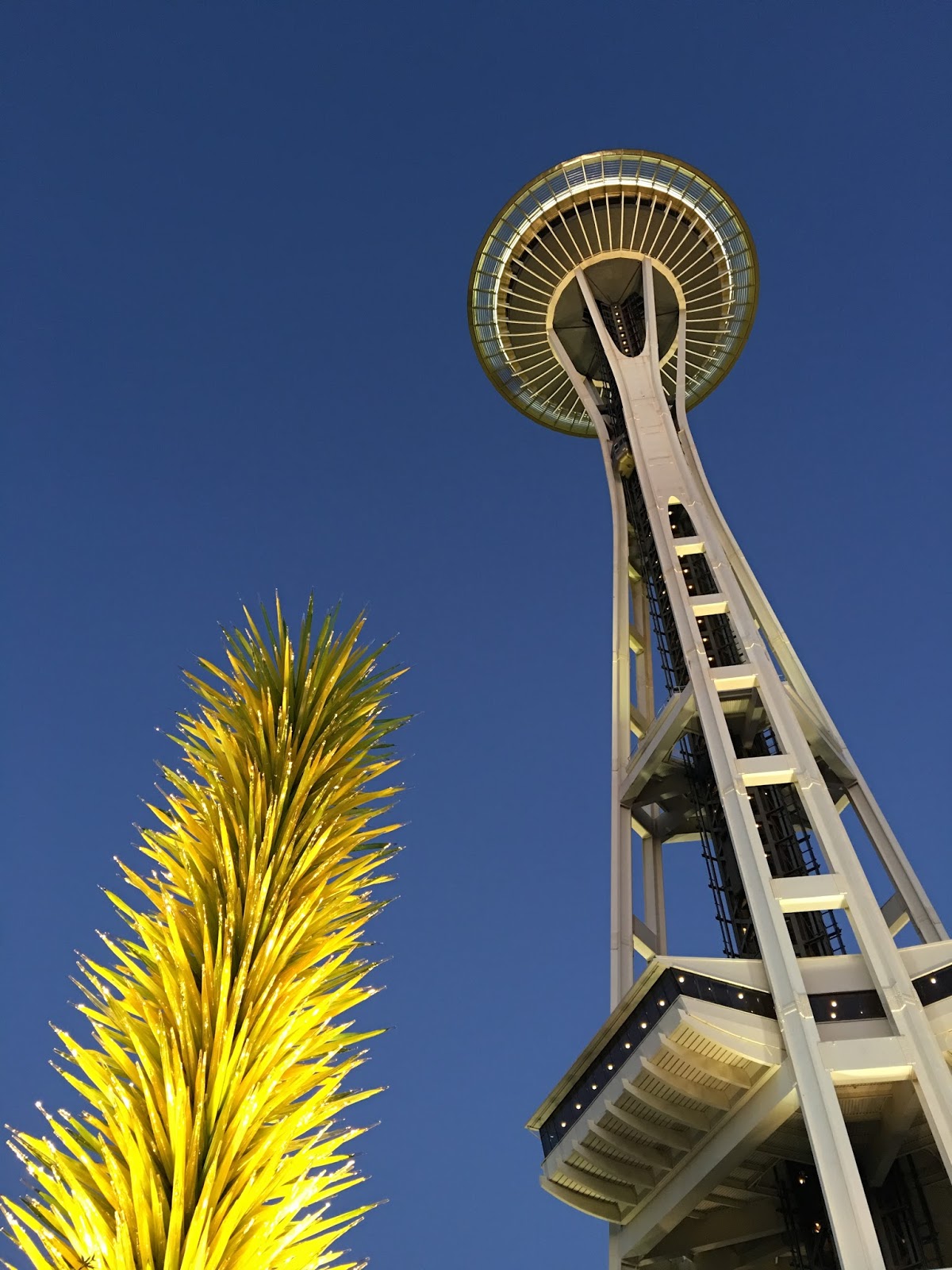
A Chihuly sculpture and the needle in Seattle, WA!

Lucky me, I’m celebrating the end of my full-time consulting job with a trip! My husband took me to Seattle for one of his conferences, so I get to relax poolside and explore the city while he works! Well, we’re finally going to do some hiking this weekend, so this is finally going to start feeling like a vacation for him too!

Taking a break from all the relaxing, I decided to write about geobabes, that is, women who are into the geosciences.  

The term geobabe originally came from my group of friends at my college’s Geology Department. It stuck with me because I appreciate that it is a fun and simple way to celebrate women and femininity in a traditionally male and masculine academic field. I have to say, though, that women are doing well and are strong in the geosciences. At the same time, we are still in a world where gender norms still affect all aspects in life. As a geologist working up a career, there are a lot of women in the field that mentor me and I feel so lucky for that.

But there are other aspects of being a woman in geology that I have noticed as well. As much as I love the generally welcoming and open nature in the geologist community, I’m also noticing there is a distinctly masculine energy that pervades the culture and that there is little room for femininity. Some might say that many aspects of stereotypically feminine traits might be backwards or demeaning towards women, but as a self-proclaimed feminist, I like to think that women are truly free when they can land anywhere on the feminine-masculine spectrum that they want. Plus, if masculinity is venerated, or even simply allowed to be the standard, that’s still creating the underlying assumption that male-oriented behavior and culture is somehow superior like it’s the standard that everyone should follow.

For example, I love painting my nails, and I’ll often have my nails done out in the field while I’m working. I have received more than a handful of judgmental comments from coworkers, being mostly men, on how I work with my nails done and whether it’s appropriate. Always graciously, I respond with saying something like my painted nails don’t affect my safety or my work product. These interactions always make me a little uncomfortable because those around me are still so ready to look beyond my work’s credibility to focus on what makes me different. That critical eye makes it that much harder to gain a solid reputation in a woman’s career.

Just last week, a woman came up to be during a professional meeting and mentioned as an aside, as if she was trying to help me, that “my look” makes it harder for people to take me seriously. I was quite surprised by this comment, considering that I always maintain the highest degree of professionalism, and I asked her to elaborate. She literally said that I come off as a “pretty girl,” and apparently that’s not ok in her book. I think probably what she meant is that I’m very feminine, with long hair, makeup, and dresses, and it’s simply harder to take feminine women more seriously.

Coming away from that interaction was certainly difficult because it made me question my credibility in the eyes of others. Especially since it came from a woman, making me aware of how critical women can be of one another. But I came to the conclusion that I can’t change the assumptions that someone might make upon seeing me at face value. I’m very happy and comfortable being what some people might describe as “too feminine,” and as much as I want to be taken seriously, I’m going to get that respect through my work, not my looks.


So, to all my geobabes out there, in all your various glorious shades, stay strong and keep finding those cool rocks. 

Saturday, July 23, 2016

HOLA, ER, I MEAN, HI: HOW TO JUGGLE AND STAY FLUENT IN MULTIPLE LANGUAGES

On my honeymoon, sipping on Cuatro Sombras, the best coffee in Puerto Rico, in June of 2015. First time I used Spanish in a long time!

It’s been kind of an intense week! I just had my last full-time Friday at work, and now I’m unwinding at my grandfather’s house by the beach, visiting family that I haven’t seen for a long time, including my sis and mummy. When big change happens in life, it’s nice to relax with family and process it with them.

While I play a really competitive round of golf (the card game!) with my sis, I figured I would chat a bit about a question that I get asked quite a bit: How do I keep up fluency in my second and third languages?

I’ve spent an incredible seven years learning and becoming comfortably fluent in Arabic. I also studied Spanish for seven whopping years in primary school, so I naturally forgot most of it. Now that I’ll be studying groundwater in Chile, I’m trying to ramp up my proficiency in Spanish, all while trying to stay as fluent as possible in Arabic.

To be honest, it’s really difficult to keep up fluency when you’re outside of comfortably speaking the language every day. Leaving a place and the language that comes with it, words in that come more slowly all too quickly, and each interaction with a person in that language soon feels awkward. But I’m really happy to say that I’ve found a few simple, routine things that help with keeping up that multi-lingual fluency:

11.)   Read an article in the language every day. With my busy schedule, I am not a super consistent follower of this rule, but I do try to read at least an article in Spanish and another in Arabic every day if I have time, and it definitely does help with keeping common words fresh in my mind. If there are any words I don’t know, I just look them up in Google Translate. I don’t even make a note of the new words because I like to keep this daily routine easy simple, though if I did I’m sure I’d retain much more new vocabulary. I can do this with Spanish, so I’d recommend even beginner speakers in a language to try this out with very small articles. I usually prefer Al-Quds for Arabic, and El Mundo for Spanish. Reuters also provides translations to a lot of languages!
22.)   Find a language partner. I can’t stress how important it is to speak! And language partners are, in my opinion, the best way to practice speaking when you can’t get that constant exposure to the language. I usually set up a time once a week or every other week to meet with my language partner who wants to learn more English and whose native language I’m learning. We take an hour speaking in English about any topic we can carry a conversation in (I like to keep it interesting, so I suggest controversial subjects like abortion and the Palestinian-Israeli conflict!), and then we switch to the other language for an hour. There are a lot of online threads and interest groups online where you can find a language partner, so definitely do it!
33.)   Don’t depend on convenient native speakers. By that, I mean, if there’s someone I know who speaks Arabic but I usually speak to them in English, I don’t try to speak them in Arabic just because I feel like I haven’t spoken Arabic enough lately. This is especially true with S. We’re so used to speaking English to each other that it’s uncomfortable to make the switch to Arabic and it ends up not being very productive anyway. So, as a general rule of thumb, if you can switch to that language comfortably, then by all means do it, but don’t get frustrated with yourself or the other person if it doesn’t work out. Make language maintenance easy on yourself! J


These are the three big things that keep me fresh with my languages. I hope this helps! And remember, above all things, be patient and kind to yourself. Learning a language feels like such an achievement that it can feel so disheartening when a bit of that fluency starts fading, but that only means that your mind has been busy with other things. Plus you can easily get it back with a little bit of practice! Good luck!

Tuesday, July 5, 2016

IT'S GETTING REAL: RESEARCH MEETING ON ALTIPLANO WATER STUDIES


Happy Fourth of July! It’s been an activity-filled weekend for me. After helping a friend move, having a giant iftar, and then spending a sun-bleached day at New Hampshire’s Hampton Beach, I’m very ready for a day to just sit and chill for a while at my favorite coffee shop, the Thinking Cup on Boston’s Newbury Street.  Or, at least, I’ll chill until the fireworks happen! Anyway, this past Friday I drove to UMass Amherst to meet with a group of professors and students that work on my new research focus, so I figured I’d chat about that a bit.

The meeting was really interesting because students were presenting research on water-related topics for the Altiplano* region beyond just groundwater, which is going to be my research focus, so it gave me a more holistic perspective on all the complex factors that affect the area’s hydrologic system**. From MIT, one student was dating ancient corals to study the past levels of prehistoric lakes, which would give insight into how the area’s climate has changed over time; a second student uses satellite images to get a more moderate understanding of how the Altiplano’s current lakes fluctuate seasonally. So it sounds like, going back fifteen thousand to a hundred and fifty thousand years, that whole area of Chile used to be a much wetter and much more temperate climate than it is now. And, even though the region is generally very arid, the lakes dramatically fluctuate based on the little rain that comes.

A UMass student, who’s also working with my advisor, talked about his work on the chemistry of near-surface waters in the eastern area of the Atacama. It was really good to hear from him and made me excited to work with him in the future. Another student from Penn State shared her killer study on Calcium isotope variations throughout specific areas of the Altiplano to pose different questions about how the hydrologic system affect those isotope variations. Basically, the water’s chemistry suggests that the hydrologic system is incredibly complex, with mind-blowingly old water mixing with much newer water in different ways throughout the Altiplano.

Afterwards, my advisor invited us all to his place for snacks and drinks. He’s so chill. Below are some photos from the day.

Anyway, the closer I get to entering graduate school, it’s really nice to find different ways to get focused and excited about what I’m about to do. Just being able to spend an entire day to think deeply about how complicated my future research would be gave me a huge peace of mind, especially when I saw all these impressive graduate students. Just watching them unpack their ideas, to see how they delve so intricately into their focus, helped me to see how I could do that same.

For all the upcoming graduate students out there, if you’re feeling like you need to find that focus and refuel that positive energy, you can always start your education before it happens. Especially in academia for natural sciences, you can learn from students in your program, discuss project ideas with your potential future advisor, read articles on your field of interest, or chat with researchers outside your program. Never be embarrassed to ask a question, and if someone gives you the “academic stink eye” because they presumably think it’s a dumb question, ignore them and ask someone else. And, above all else, give yourself lots of positive energy!

Meeting Room at UMass

After-Meeting Chill Session with my Advisor!


*Altiplano refers to the northeastern area of Chile that is way lifted high above sea level. It’s an interesting area to study because precipitation is so rare there, since the altitude blocks moisture and also the weather systems curl around and away from the area thanks to climate-defining convection currents. 

** Hydrologic system refers to the process by which water cycles through the atmosphere, precipitates to become surface water, drains into the soil to become groundwater, enters surface waters, and then gets evaporated back into the atmosphere.

Tuesday, June 21, 2016

FAIRUZ IN THE MORNING; UM KULTHUM AT NIGHT

Is it really almost the middle of July? This is insane! Summer always feels like it’s flying by way too fast. I feel like I’m losing my mind because I planned a dinner date with S at Sofra, an Arabic restaurant in Watertown, that closes early! I can’t believe I didn’t check when they close. Luckily, while I wait for S to join me so we can figure out a new dinner plan, Sofra has some nice outdoor seating, so I’ll just type away at my computer while I enjoy the balmy evening and watch some Pokemon Go players zigzag around the sidewalks. 


So, I want to talk about something that is really close to my heart: the great Arabic singing legends that fill my home with finger-snapping classics. Specifically, there are two of them, and I love both of them dearly as if they were my own grandmothers. Fairuz and Um Kulthum


I’ll give you an idea of how awesome these ladies are. Fairuz has released over 800 songs in her lifetime, while Um Kulthum is known as the “Star of the East” just because she’s that amazing. Families and public places still play both of these ladies’ classic songs even though they’re decades old. Four orders of generations all around the Middle East listen to and love these singers, knowing all the words to dozens upon dozens of their songs. In terms of their popularity, I would argue that there is literally no equivalent in the western world. Comparatively, the Beatles may come close, but it’s not like every family listens to them weekly, if not daily.

In a lot of places around the Middle East, or at least with S’s family, there is a strict standard for listening to these two melodious ladies. Fairuz is played during the morning, and Um Kulthum is only for the night. At first, I found this humorously endearing, and then I quickly fell in line with tradition because, listening to their repertoire, they each fit perfectly within their allotted listening time frame. Fairuz’s jazzy tone, with ethereal references to long-gone love or dreamily poetic metaphors about eyes of snow, fits perfectly into slowly waking up over a cup of Turkish coffee; Um Kulthum’s sultry voice wavers with the passion of love realized, and her classic Arabic orchestra swells with her crescendos to create a sense of drama that a listener can only best appreciate in a moody, late night café with shisha (or hookah) in hand.

When I hear Fairuz, I think of morning sunlight shimmering through the curtains, hours-long brunches in our garden under the olive vine trellis, and family humming those familiar tunes while sipping from steaming cups of mint and ginger green tea. When I hear Um Kulthum, I think of all my favorite cafés in the Middle East, smoke-filled and bustling with laughing friends as they gather around tiny tables and chat late into the night.

For some people, the distinction of when you can listen to either singer is pretty strong. When I went with S to a weekend away with a group of Arab friends, I tried to be the DJ for an evening. Fairuz accidentally came on, and three different people stopped what they were doing to look up and demand a different song! I couldn’t have pressed the “next” button faster!

And I totally agree with it. So if you haven’t heard of these ladies, I highly recommend a listen, but try to listen to Fairuz over breakfast and Um Kulthum after dinner, and then you’ll see what I mean!

HYGIENE ON THE TRAIL


When a Shower is Three Days Away: Hygiene Tips for the Trail

I’m excited to wind down this Thursday by taking my bro-in-law Jamal out for dinner at our favorite sushi joint in Boston, Avana Sushi. If you’ve never been, I highly recommend! I managed to get to the restaurant a little early, which is great, because now I have a bit of time to chat with you guys about something I’ve wanted to talk about for a long time: keeping up with hygiene while backpacking or on long camping trips.

And it’s really tough! Especially when you’re outdoors in a place where running water is limited. I’ve been through many, many camping trips where showers were scarce and really beautiful outdoor experiences were slightly dampened by the uncomfortable feeling that layers of dirt and grime were caking onto your skin. I will add, hygiene needs depend on the climate. I personally prefer desert climates like California’s Death Valley because the arid environment immediately evaporates any sweat, which prevents bacteria from growing and spreading. No matter the climate, though, there are a few simple hygiene steps that will help you to enjoy the great outdoors even more!

So here are some tips:

1.)  Baby wipes are key! I can’t stress this enough; they’re one of my necessity items for any camping trip. Wiping down the body with just a few baby wipes after a long hike makes a huge difference. Plus, even if there’s access to showers, baby wipes still come in handy in all sorts of versatile ways, including messy s’mores snacks, soothing an injury, or having an embarrassing diarrhea emergency on the trail (hey, it happens!). I even bring these bad boys on backpacking trips, though admittedly in much smaller numbers; I usually will count out 5 per day per person for the trip, and then separate them from the main pack and compress them in a zip lock baggie.

2.)  Do not wear cotton bases. I’m not backing this up with any science, though I’m sure it’s out there, but in general I find that cotton bases (i.e. underwear and undershirts) hold in sweat a lot more than non-cotton materials like spandex. Not only does non-cotton stuff smell better after, say, five days without a wash, but they also insulate and help you regulate your body temperature better. Below are a few items that I use and wear regularly for camping trips.

3.)   Follow your nose; clean your tent when it smells. Bacteria is really helpful in telling us where it’s growing by smelling really bad, so always sniff around when you’re setting up or breaking down the tent. If you have room, and I recommend you make room, try to bring small packages of disinfectant wipes with you as well and wipe down the tent every time before breaking it down. It’s easy for a tent to get stinky in no time, especially if that’s where you’re storing all your stuff, so if mid-trip you begin to smell something, a few quick wipe-downs of the tent, and anything else that smells, really helps against your tent getting that stale body odor smell. As a last resort, you could use odor maskers, but I usually avoid them since they don’t really tackle the stink’s source and are also often carcinogenic. J

4.)  Keep things dry. Everyone loves a dip in the lake, but if you pack a damp towel or bathing suit, your things will smell musty in no time. It’s important to dry out everything that gets wet or damp, even sweaty clothing, before packing them away. If I don’t have a clothes line with me, and I usually don’t unless it’s a very luxurious kind of car camping with family, I like to leave wet things draped over my tent on sunny days. The sun’s UV rays also act as a disinfectant, so you’re technically drying and disinfecting at the same time!

5.)  Separate icky from non-icky. Those plastic bags that inevitably accumulate somewhere in your pantry have a lot of versatile uses, including keeping dirty laundry away from clean and unused clothes. It’s easy for dirt and smells to travel in tightly packed bags like backpacks. Keeping dirty laundry bagged and separated from everything else will help to make sure that your clean clothes stay clean! I’ve also noticed that most back-packing backpacks have two main compartments, which you can also use as a barrier between dirty and clean.

Those are my main five tips! Just remember: it’s easy to get hung up on the little things, but try to remember that the outdoors is meant to get you a little dirty. You’re supposed to get dirt between your toes and twigs in your hair. It’s a part of the experience! So focus more on finding a comfort level that’s right for you rather than being as pristine as possible.

Anyway, let me know what you think! Do you have any hygiene tips of your own? Follow my "Creative Camping" Pinterest Board to get more ideas.

IFTAR FUN & RAMADAN DECOR


I’m taking a quick break from this hectic Saturday to have a little snack in my room while S and his family prepare a ginormous iftar meal that could probably feed twenty people when we’re probably having eight guests. For those of you who aren’t familiar, Ramadan is the holy month is Islam when muslims fast (i.e. consume no food or water) from before sunrise to sunset. It’s a beautiful, prayerful month for the Muslims I know, and I really enjoy it for several reasons. First, I love to decorate for special occasions. As a Christian American who’s used to super commercialized holidays, I show my support by decorating the house and putting up things like an “iftar time” announcement! It’s turned into a pretty serious hobby; I have a whole Pinterest board dedicated to Ramadan and Eid decoration ideas.

The second and favorite thing about Ramadan for me is the mouth-watering, unparalleled array of food. Oh, the food! I get hungry just thinking about all the amazing food, I write as I reach for my fourth caramel delite out of my secret girl scout cookie stash. So, for those of you who don’t know, the word “iftar” literally means the breaking of the fast. That means, when Muslims break fast at the end of a long day, and especially after a grueling fifteen hours of sunlight during the summer, there has to be some amazing food to fill those grumbling tums. Seriously, foodies, if you don’t have any Muslim friends, you need to make some fast and partake in the mind-blowing culinary phenomenon that is an iftar.

Iftars are usually tons of dishes of food. I calculate one 16-inch platter-sized (i.e. huge) meal for every two people. A lot of these meals also involve a lot of time, and often days in advance, of food preparation. So, despite the hunger and the thirst, there are so many tasty treats to look forward to at the end of the day. I know that, for me, the memories of late-night dinners with friends, lounging in our moon-lit back yard under our grape vine trellis, is priceless.

Below are some photos of our food and gatherings! Enjoy!

A lower-key iftar with just S's immediate family: lentil soup, which is a very common iftar appetizer, with just one entree!

Can you handle all this goodness? This iftar had lentil soup again, with fattoush (a popular iftar salad), stuffed grape leaves, and mouttabal (i.e. chopped-up grilled eggplant with lots of yummy things mixed in).

I'm going into a food coma just looking at this photo. From closest to farthest, we have kibbeh, makloubeh (which exactly translates to "upside down" because the recipe requires flipping), my pretty Le Creuset is hiding a bomb ass meal called shish barak which is meat dumplings in yogurt sauce, then there's ground beef-stuffed zuchini, and finally stuffed grape leaves with the most tender lamb on top. 

We made only an average-sized meal (i.e. still more than enough) because we invited our guests very last minute. This is a famous dish called kebseh, which is basically very spiced chicken and rice. We also added little plates of moutabbal on the side.


I am absolutely enamored by this fetteh, which is a word that you can translate as "torn up" because you tear pieces of flat bread into little bits before you pour an amazing yogurt sauce over them. I'm used to mummy-in-law's fetteh which has chicken on top, but this version that our friend from Damascus makes is vegetarian with pomegranate seeds and melted semini (purified butter) on top. There's also chickpeas and parsley.

MY THESIS WORK: LITHIUM-RICH WATER IN CHILE'S ATACAMA DESERT

 It’s been kind of a wacky but beautiful week for me. After returning from my Father’s Day camping trip with Dad, I’ve been exhausted and sleep looks so good but the energy from Ramadan lures me into staying up late. So now I’m nursing endless cups of chai tea at the office just to keep myself awake! I’ll press the reset button with a long sleep-in this weekend.

Anyway, it’s getting to that time where I’m preparing to return to school for my graduate degree! And I figured I’d share a bit about my work to see if anyone’s interested in learning about it, discussing it, or even potentially collaborating on it.


Basically, I’ll be studying the lithium-rich waters of an aquifer that’s located in the Atacama Desert in Chile. This whole project is cool for a number of reasons, the first being that this happens to be the driest desert in the entire world second only to Antarctica. Yet, it happens to have a bunch of springs that have created these small pools all over the place. If you calculate the evaporation rate on these suckers, you’d see that the spring has to be pulling in a mind-blowingly huge amount of water from the ground (cuz it ain’t coming from the sky). My advisor has already worked with a previous student on calculations for the size of this aquifer’s watershed, and it’s calculated to be so big that it stretches into Argentina. It’s bananas.

Random fact: This one pool in the Atacama is a big-time breeding ground for flamingos. Seriously. So random. 

So what am I going to do in this super-cool-freak-show of a desert? I’m basically going to help to figure out where the lithium is coming from. This turns out to be an important question, since this one spot happens to be one of the biggest sources of lithium in the world. We all need batteries! And, on top of that, I get to learn Spanish!

I’m excited to share more about how my research is going as it progresses. Stay tuned!